5 Steps Managers Use to Make Disagree and Commit Verifiable
A manager's five-step method to capture objections, name owners, and enforce real execution. Includes the one-paragraph decision log and a review rhythm...

On this page
- What Does Disagree and Commit Actually Mean?
- Why Disagree and Commit Matters for Speed and Quality
- When Should You Use Disagree and Commit?
- A Five-Step Playbook for Putting This Into Practice
- When “Disagree and Commit” Becomes Alignment Theater
- How Decision Journaling Makes Commitment Verifiable
- What One Habit Changes Everything
- Turn Dissent Into a Record You Can Actually Review
- Sources
- FAQ
“Disagree and commit” means a team member voices real objections to a decision, then executes it fully once it’s made, without sabotage or foot-dragging. Jeff Bezos popularized the phrase at Amazon to keep decisions moving without forcing false consensus. If you lead a team, the immediate move is simple: get the dissent on the record before the call is made, and name who owns execution the moment it is.
TL;DR:
- Disagree and commit works best when objections are documented before decision-making and everyone executes with full commitment afterward.
- It is most effective for reversible, quick decisions like testing new features or pilot projects, rather than irreversible, expensive choices.
- A clear five-step process—propose, surface dissent, decide, commit, and review—ensures dissent influences the final decision and accountability.
- Written records of objections and commitments provide verifiable proof that can be reviewed to improve calibration and decision quality over time.
- Low psychological safety and inauthentic commitment often turn this practice into empty theater, so requiring written dissent and scheduled follow-up is essential.
What Does Disagree and Commit Actually Mean?
The phrase describes a two-part deal. First, anyone with a stake in a decision gets a real hearing for their objections, evidence, and predicted failure modes. Second, once the decision is made, everyone executes it as if they’d agreed from the start. No slow-walking, no “I told you so” sabotage, no half-hearted compliance designed to prove the skeptic right.
Bezos didn’t invent this idea. Andrew Grove ran Intel through similar logic decades earlier, pushing managers to argue hard in the room and then align completely once a call was made. It’s a management discipline, not a slogan, and it only works when both halves get equal weight.
Organizations that lean on it tend to share a trait: high decision volume, real time pressure, and a need to avoid stalling on every disagreement. That short list includes:
- Amazon, where Bezos used the phrase explicitly in his 2016 shareholder letter to describe overriding his own hesitation on an Amazon Studios show.
- Intel, where Andrew Grove built a culture of open argument followed by unified execution.
- Netflix and GitLab, both of which document similar norms in their public culture materials, treating disagreement as an input rather than a threat.
Why Disagree and Commit Matters for Speed and Quality
Committees that wait for full agreement usually don’t get faster decisions. They get slower ones, watered down by the loudest holdout in the room. Bezos called this the “consensus trap” in his 2016 letter, and it’s the real reason the principle exists: it protects decision velocity in organizations where every choice can’t wait for everyone to feel good about it.
The overlooked half of the equation is quality, not just speed. Research covered by HBS Working Knowledge argues that leaders who actively reward dissent, rather than merely tolerate it, get better decisions and avoid the performance costs of conflict avoidance. Silence isn’t agreement. It’s often just risk sitting unspoken until the project fails.
The overlooked signal: a documented objection that later turns out to be right isn’t a mark against the process. It’s proof the process worked. Teams that treat a wrong initial call as a personal loss for the dissenter, instead of useful information the group had access to, are training people to stop raising concerns at all. That’s the outcome you’re actually optimizing against.
When Should You Use Disagree and Commit?
Not every decision deserves the same treatment. Bezos drew this line clearly in the 2016 letter: some decisions are two-way doors, and some are one-way doors, and treating them the same wastes energy or, worse, locks you into a mistake.
Two-way door decisions are reversible. A pricing experiment, a feature toggle, a two-week trial of a new meeting format. These are exactly where disagree and commit earns its keep: move fast, let the skeptic’s concerns get logged, and revisit in a set window.
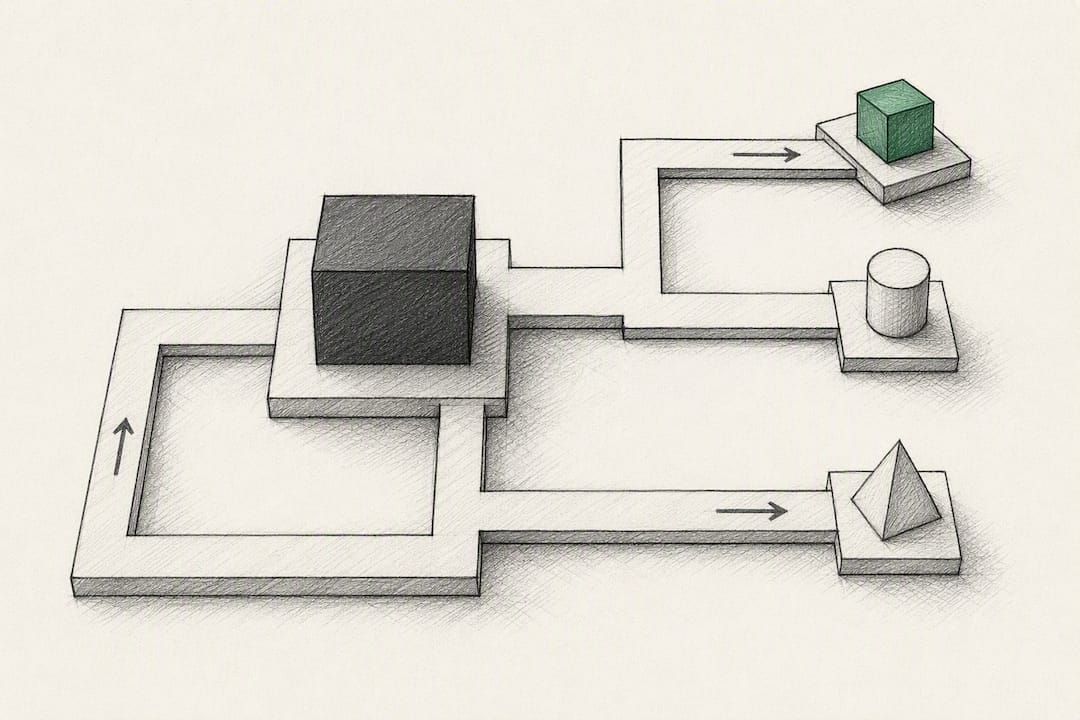
One-way door decisions are hard or expensive to undo. A layoff, a platform migration, a public pricing change with legal implications. These deserve slower deliberation and, often, more than one round of real debate before anyone commits.
Run a quick checklist before invoking the principle in a meeting:
- Can we reverse this in under a month without major cost?
- Does the dissent point to a data gap we can close quickly, or a values conflict we can’t?
- Is there a cheap way to pilot or timebox this instead of deciding outright?
- Who owns reversing the decision if the dissenter turns out to be right?
Borderline cases usually resolve with a pilot: shrink the blast radius, set a review date, and let the data settle the argument instead of the loudest voice in the room.
A Five-Step Playbook for Putting This Into Practice
Most teams skip straight from “someone disagrees” to “we voted, move on.” That’s where the principle breaks. A cleaner sequence, drawn from practitioner playbooks like Fearless Culture’s disagree-and-commit framework, gives dissent a real slot instead of a token one.
- Propose. State the decision, the reasoning, and the evidence behind it in writing, before the meeting if possible.
- Surface dissent. Ask directly: “What assumption am I making that you don’t buy?” or “What would have to be true for this to fail?” General discomfort doesn’t count. Push for a specific claim you can evaluate.
- Decide. The decision owner makes the call, explicitly naming which dissenting points changed the plan and which didn’t, and why.
- Commit. Every participant states, out loud or in writing, that they’ll execute as designed. This is the step teams skip, and skipping it is exactly what turns commitment into theater.
- Implement and review. Set a review date tied to a metric, not a vibe, and check in on schedule.
The written record from steps 2 through 4 doesn’t need to be long. One paragraph naming the decision, the strongest objection raised, the metric that will settle the argument, and the person accountable for execution covers it.
Owner: [product lead].
Pro Tip: *Ask dissenters to name the specific evidence or failure mode they’re worried about, not just their general unease. “I have a bad feeling” doesn’t give you anything to test later.
When “Disagree and Commit” Becomes Alignment Theater
The phrase gets abused constantly, and the abuse has a name: alignment theater. That’s when a leader announces a decision, asks “any objections?” to a room that already knows objecting is career-limiting, hears silence, and calls it commitment. Forbes coverage of Amazon’s decision practices points out that verbal signoffs mean nothing without real follow-up. Genuine dissent gets asked for, heard, and paired with a review ritual. Fake commitment is a nod in a meeting and total disengagement afterward.
Watch for these signs:
- Objections raised in hallway conversations but never in the room where the decision gets made.
- A dissenter who agrees fast and then misses every deadline tied to the project.
- Power dynamics where only senior people’s dissent gets logged, and junior objections evaporate.
Low psychological safety makes this worse. Research in the Journal of Business Research links low safety and inauthentic leadership to defensive decision making, where people protect themselves instead of raising real concerns. The fix isn’t a slogan. It’s requiring written dissent before every consequential call, having the leader model disagreement openly first, and setting a fixed check-in date so commitment gets tested against outcomes, not just intentions.
How Decision Journaling Makes Commitment Verifiable
A verbal “I’m on board” evaporates the moment things get hard. A written record doesn’t. That’s the practical gap decision journaling closes: it forces the dissent, the confidence level, and the owner onto the page before anyone knows how the decision turns out.
A structured bet typically includes:
- A timestamped hypothesis and an explicit confidence level, stated as a probability rather than a feeling.
- The specific objection raised, and by whom, before the decision was locked.
- A named owner and a metric that will decide the outcome.
- A post-mortem that separates whether the decision was sound from whether it simply got lucky or unlucky.
Betlog’s approach moves a bet through stages: Idea, Running, Reviewing, Decided. A pricing test might start as an Idea with a logged dissent about churn risk, move to Running once launched, hit Reviewing at the 30-day mark, and close as Decided with a verdict that names whether the dissenter’s prediction held up. That last step is what most teams never do, and it’s the one that actually builds calibration over time.
What One Habit Changes Everything
Start with this: before any consequential call, write one paragraph naming the strongest objection raised, who raised it, and who owns the outcome. That single habit does more for psychological safety than any all hands speech about “speaking up,” because it makes dissent visible instead of theoretical.
It also gives you something most disagreements never produce: a record you can check later. Run it on one decision this month, review it in thirty days, and see if the dissenter was right.
— Cesar
Turn Dissent Into a Record You Can Actually Review
Betlog is built for exactly the gap this article keeps circling back to: the difference between a decision people nodded at and a decision someone actually owns. Instead of trusting memory or a Slack thread nobody can find later, you log the hypothesis, the dissent, the confidence level, and the metric that will settle it, all before the outcome is known.
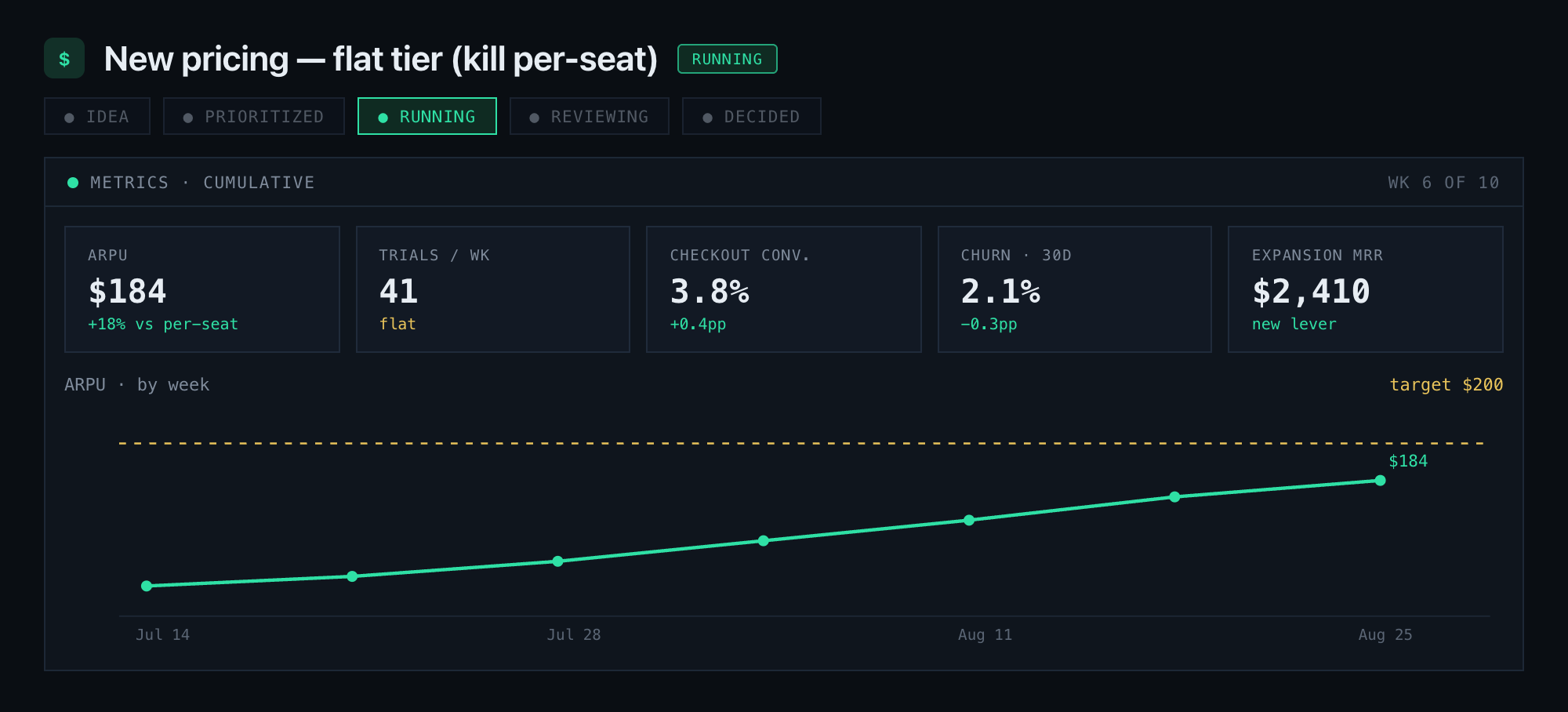
That written record is what separates real disagree and commit from theater. When the review date hits, you’re not relitigating who said what. You’re checking a paragraph against a result. Betlog runs on one plan at $39 per month or $390 per year, and the fastest way to see if it fits your team is to log a single decision this week: pick one call with real dissent behind it, write down the objection and the owner, and review it on the date you set. Start on the Betlog landing page and run that first bet before your next big call.
Sources
- Amazon 2016 letter to shareholders
- Encouraging dissent in decision making — HBS Working Knowledge
- How Jeff Bezos uses faster, better decisions to keep Amazon innovating — Forbes
FAQ
What Is Meant by Disagree and Commit?
It means raising real objections to a decision before it’s made, then fully executing that decision once it’s finalized, regardless of whether your objection won. The goal is honest debate up front and unified action afterward, not silent compliance.
What Does Disagree and Commit Mean at Amazon?
Amazon uses it as a way to avoid the “consensus trap” and preserve decision speed at scale, a practice Bezos described directly in Amazon’s 2016 shareholder letter. He gave the example of approving an Amazon Studios show despite his own doubts, then backing the team’s judgment fully.
Who Said Disagree and Commit First?
Jeff Bezos popularized the phrase publicly, but Andrew Grove practiced a similar discipline at Intel decades earlier, pushing for open argument followed by unified execution. Neither claims to have invented the underlying idea. It reflects a long-standing management principle about separating debate from action.
What Are Amazon’s 14 Leadership Principles?
Amazon publishes a set of leadership principles that guide hiring and decision-making, and “have backbone; disagree and commit” is one of them. The principle sits alongside others like customer obsession and ownership, and it specifically addresses how employees should handle disagreement with a decision once it’s made.
How Do You Document Dissent Without Slowing Things Down?
Keep the record to one paragraph: the decision, the strongest objection raised, the metric that will judge it, and the person accountable for the outcome. A tool like Betlog can hold that structure so the write-up takes minutes, not meetings.